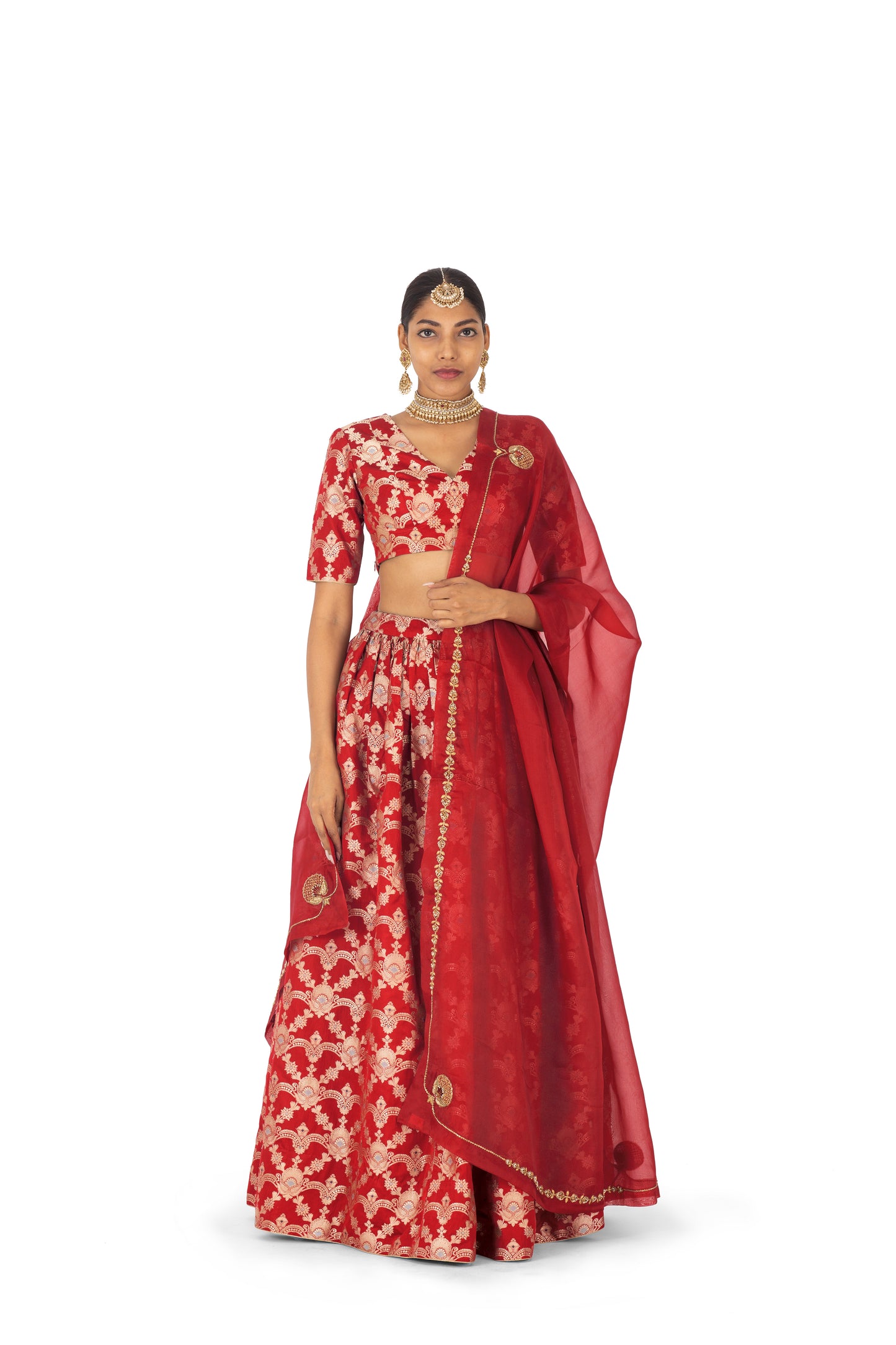
From the moment a bride steps into a royal red bridal lehenga, she becomes a living portrait of tradition meeting grandeur. There’s an aura in red that no other hue quite replicates, fiery yet romantic, bold yet deeply cultural. This timeless garment has adorned brides through centuries across India, weaving together symbolism, craftsmanship, and sheer splendor into every fold.
The Significance of Red
Red, in many Indian traditions, isn’t just a color; it’s a symbol of new beginnings, prosperity, love, and fertility. It’s the color of passion, devotion, and auspiciousness. Whether worn in deep burgundy tones or vibrant scarlet, a royal red lehenga sets the stage for the wedding rituals, becoming a centerpiece at mandaps and in photographs, reflecting candlelight and festoon lights with equal grace.
Key Elements That Make It Royal
1. The Fabric & Weave
Luxurious silks—especially Varanasi silk or brocade, are often the fabric of choice. They offer that gleaming surface, rich texture, and drape that feels both heavy and flowing. Metallic threads like zari bring luminosity; the weave itself may form elaborate motifs that tell stories, flowers, paisleys, vines, or geometric patterns.
2. Embroidery & Embellishments
Hand embroidery plays a major role , zardozi, gota, beadwork, sequins, and motifs in “kunjam” or floral appliqués , all amplify visual richness. The embroidery may be concentrated densely on the lehenga skirt hem or the border of a dupatta or scattered as a jaal (net) over the fabric. Highlights like contrasting mirror work or meena (enamel) work bring in color pops or accentuate the red with jewel hues.
3. Silhouette & Structure
A royal bridal lehenga often leans toward heavily flared skirts , the more panels, pleats, or layers, the grander the look. The blouse (choli) and dupatta are designed to balance the skirt: if the skirt is weighed with heavy embellishments, sometimes the blouse is simpler, or vice versa. The weight—literal and visual—lends gravity to the ensemble, making every movement dramatic.
4. Color Variations & Contrast
Though red is central, variations matter. Deep reds blending into maroons, crimson tones, ruby, or burgundy allow brides to find a shade that complements their skin tone. Subtle contrast elements — say gold embroidery, ivory motifs, or jewel-toned accents (emerald, sapphire, etc.) — help the red stand out even more intensely.
5. Draping & Accessories
Beyond the lehenga itself, accessories like dupattas can be draped over the head for ceremony, across the arms, or over one shoulder. Heavy jewelry, choker necklaces, long layered chains, maang tikka, heavy earrings, kamarbandh (waistbands), and bangles, complements the richness of the ensemble. Footwear, makeup, and hairstyle (often elaborate) all play supporting roles to ensure the bride appears as regal as the dress.
Care & Considerations When Choosing One
- Weight & Comfort: A heavily embroidered or brocade lehenga is heavy. Brides must balance grandeur with comfort. Consider how long you’ll have to stand, sit, or move.
- Mobility: Dance, rituals, photos — sometimes the lehenga needs to allow flexibility. Go for lighter dupattas or detachable parts if possible.
- Preservation: Fabrics like silk or brocade with metallic threads need care — dry clean only, storage away from sunlight, airing to prevent mildew or tarnish.
- Tailoring & Fit: Even a perfect design looks off if fit is wrong. Measurements around waist, hip, bust, and lehenga length are critical.
- Budget vs Craftsmanship: Handwork and high-quality brocade come at a premium; the more embellishment, the higher the labor and materials. But investing in real craftsmanship often means the lehenga is heirloom-worthy.
Royal Red Bridal Lehenga in Modern Time
While traditional royal red lehengas were uniformly ornamented and heavy in every aspect, modern brides have more choices. Some prefer minimalist red skirts with ornate borders and light blouses; others mix fabrics like organza and brocade to lighten the ensemble. There’s also the fusion trend: western cuts with Indian embroidery, or unconventional drapes. Yet, the core remains — deep red, meaningful embellishment, and craftsmanship that speaks of tradition and love.
Florals, Jaal & Brocade — Case Study Examples
Take, for instance, a lehenga with an archival floral jaal woven through metallic zari threads. The subtle interplay of floral vines across a deeply dyed red or angoori tone gives romantic depth without overwhelming the senses. Or consider panelled brocade skirts echoing architectural patterns, ogee curves, or Islamic arches embellished with floral tassels in contrasting meena, which bring with them both history and visual drama. These examples show how structure, motif, and finish work together to create something majestic. Information for these details is taken from the Lehenga collection page where attributes like textile type (Silk, Varanasi brocade, organza, embroidered), colors (including Red), and specific pieces like “Sameliya” (with archival floral jaal in metallic zari with contrasting meena) are highlighted.
Why Royal Red Bridal Lehengas Endure
They combine emotion and memory. A bride in red is rooted in ritual; she carries symbolism into the rite of marriage. Photographs in reds tend to age well , the color doesn’t fade in the memory the way trends do. Also, red flatters many skin tones, and with the right undertones or shades, it can either glow or deepen beautifully.
In Conclusion
For any bride seeking an ensemble that honours heritage, stunning craftsmanship, and deep symbolism, the royal red bridal lehenga remains unmatched. From the fabric and weave to embroidery, silhouette and accents, every element contributes to making the bride look and feel majestic. If you want designs that bring forth these qualities with fine textiles like Varanasi silk, organza, brocade and exquisite handiwork drawn from India’s rich craft traditions, Raw Mango is a brand that exemplifies all of these with elegance and depth.


Comments (0)
Login to post a comment.