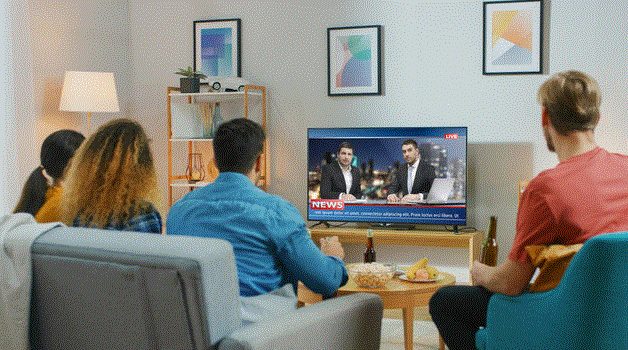
TV has always been at the heart of American life, dictating evening entertainment, news viewing, and media consumption. Yet, in a new era of television viewing is emerging in the USA. Viewers are breaking free from conventional cable contracts, seeking flexible and internet based platforms that are more choice rich and in control. Among the online alternatives driving this change are ifvod tv and IPTV, both of which are on the rise as affordable and accessible methods of consuming content. This trend marks not only a shift in platforms but a shift in how Americans engage with television itself.
The Move Away from Cable
Cable TV was the reigning source of entertainment in U.S. households for decades. Families huddled around scheduled broadcasts, and premium packages delivered hundreds of channels. Still, the expense of cable packages coupled with inflexibility drove many viewers to seek alternatives. Based on recent Nielsen statistics, conventional cable subscriptions have plummeted in recent years, with millions of homes dropping the cable. The decline is the start of a wider shift towards on demand and internet-delivered platforms.
Streaming as a Foundation
The success of Disney+, Hulu, Netflix, and Amazon Prime exposed Americans to streaming. Audiences no longer had to wait for particular airtimes to watch whole seasons or pause and resume shows as they pleased. This altered consumer expectations, with flexibility and personalization becoming the key aspects of watching TV. Streaming services set the stage for even more sophisticated systems like IPTV and ifvod tv, which now take this convenience into live programming and foreign content.
The Emergence of Ifvod TV and IPTV
Behind this new trend are portals like ifvod tv and IPTV. IPTV, or Internet Protocol Television, transmits live programming and on demand content directly over internet connections. It introduces the advantages of streaming to live programming, where one can view sports, news, and entertainment without depending on cable. Ifvod tv, for its part, boasts a huge collection of shows and movies, making American audiences available for both domestic and global content. Combined, they are the future of television: internet-first, cheap, and extremely adaptable.
Flexibility Redefined
One of the greatest advantages of IPTV and ifvod tv is their flexibility. Viewers can watch on smart TVs, laptops, tablets, or cell phones, making entertainment accessible at all times. Younger Americans especially appreciate this mobility. Polls indicate that more than 70 percent of Gen Z prefer to watch television on devices other than the conventional TV set. This increasing trend reflects just how significant flexibility has become in determining the future of television in the USA.
Evolution of Consumer Patterns
According to Deloitte, over 80 percent of Americans have at least one paid streaming subscription, and almost half have three or more. In addition to these favorite platforms, IPTV services are incrementally increasing, particularly for homes that want live programming without cable. Ifvod tv provides an additional layer with its rich global content, providing an option for viewers who desire variety at a reasonable cost. The new television consumption wave represents not just technology, but a cultural shift in American entertainment perception.
Sports and Live Programming Go Digital
Live sports used to keep entire families bound to cable, but IPTV and ifvod tv have altered that equation. Americans now can watch NFL, NBA, MLB, and even global tournaments online. Ifvod tv also provides viewers with access to international sporting events that are not available through traditional broadcasts. With live programming going online, cable loses one of its last benefits, affirming that the future of watching sports is on digital platforms.
Technology Driving the Transformation
Advances in internet speeds and smart devices have driven the transformation. Be it 5G networks or smart devices such as Roku, Fire Stick, and Apple TV, streaming IPTV services and ifvod tv has never been more convenient. According to eMarketer, more than 120 million U.S. households have connected TV devices, which make the shift to internet-first viewing seamless. Technology keeps making these platforms simpler and more reliable, which leads to faster adoption across the country.
Generational Adoption Patterns
Generational trends also contribute to this change. Gen Z and millennials quickly embrace emerging platforms such as IPTV and ifvod tv, preferring ease and choice. Baby Boomers and Gen X are increasingly catching up, usually being prompted by younger relatives. Surveys indicate that over 40 percent of older audiences currently utilize at least one digital streaming platform. This crossover of generations means that the new generation of TV viewing will be shared by viewers of all ages.
The Global Advantage
Ifvod tv specifically points to another broad trend the globalization of television programming. U.S. audiences are increasingly watching TV shows from Asia, Europe, and Latin America, moving beyond typical Hollywood fare. International content access widens cultural awareness and holds viewers' attention with varying programming. Global reach is a distinguishing feature of the new television.
Challenges Along the Way
Although IPTV and ifvod tv growth is promising, there are challenges. Rural stability remains a problem on the internet, and some viewers encounter buffering or capped bandwidth. Licensing of content also limits access to specific shows or live streams in certain geographic areas. Furthermore, expanding paid subscriptions can pose affordability issues for some households. Nevertheless, despite these obstacles, momentum behind digital TV platforms continues to strengthen.
Looking to the Future
Industry experts predict that by 2030, the majority of households in the USA will rely on internet based television rather than cable. IPTV services will expand further with features like interactive options and real time customization, while platforms such as ifvod tv will continue to broaden content libraries to attract global audiences. Artificial intelligence may also help personalize recommendations, making TV viewing more immersive and tailored than ever before.
Conclusion
The emerging wave of television viewing in the USA is more than a technology shift. It is a cultural transformation towards flexibility, affordability, and worldwide access. ifvod tv and IPTV are at the forefront of this revolution, providing Americans a means of experiencing television that is suitable for contemporary lifestyles. Where there are problems to solve, however, the way ahead is certain: tomorrow's television is digital, diverse, and capable of serving audiences as no cable ever could.





Comments (0)
Login to post a comment.