When you have a look at a home décor store or check out market websites, you will realize that metal crafts come in two different categories, i.e., handcrafted pieces and machine-made products. Both of them can be used as decorative items, but the differences between them are very significant and go a long way beyond the mere difference in looks. If you understand these differences, you will be able to make the right choices, especially when it comes to selecting authentic metal crafts for your home or giving them as gifts.
Metal crafts, which are one of the main pieces of the Indian tradition of art and crafts, have always been the stars of the country's cultural heritage, even today. The different brass utensils and lovely copper wall hangings that are available at local bazaars are not only the products of nature but also the result of the extraordinary skill and technique demonstrated by the artisans who have been doing their work for many generations. In contrast, machine-made alternatives that are created through mass production have been made almost to resemble the originals, but they are devoid of the embodied soul of true craftsmanship.
The Heart of Handcrafted Metal Work
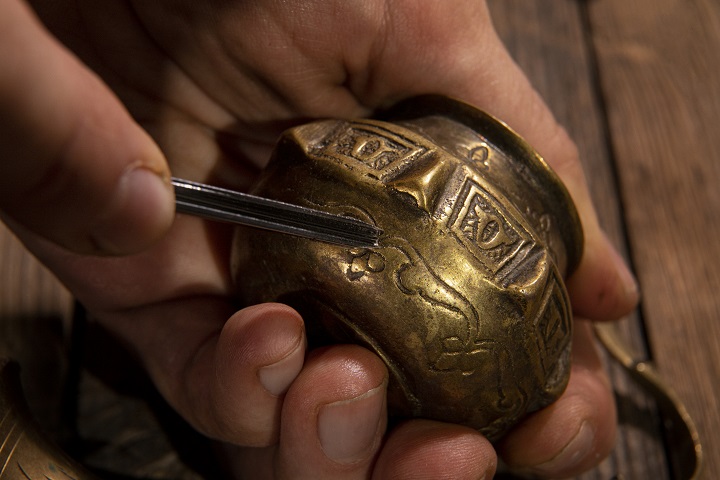
Handcrafted metal crafts are products of a tedious process that is mostly a result of years of training and practice. To transform metals into eye-catching products, artisans rely heavily on traditional tools like hammers, chisels, and engraving instruments. Every product is also the artist's fingerprint of the creator, emphasizing its uniqueness.
The whole method is a process of changing metal into a more flexible one. The metal worker hammers, bends, and shapes the article to the required design after the metal is made flexible. The pieces generated by the use of the hand-forging method are the ones that have the most outstanding characteristics and are the deepest ones. In addition, the imprints may call for the use of metals such as the combination of silver and copper, which is protected by a versatile tool called a machine, but the final step is done by hand to ensure there are no tiny defects on the surface of the product.
Besides the rich metalwork, Indian artisans have also mastered various metalworking traditions. As an example, the brass work of Moradabad, the copper art of Thanjavur, and the copper engraving of Kashmir are some of the most famous metalworking traditions. The different offbeat areas of metalworking have been closely studied and documented in this book to highlight the diversity and richness of our metalwork heritage.
Understanding Machine-Made Metal Products
Machine-made metal products are those items that are made through automated processes in a factory. To be more specific, stamping, casting, and die-cutting machines can produce thousands of identical pieces in the time it takes an artisan to complete one handcrafted item.
The products made by machines provide the user with a set of advantages, i.e., they ensure the maintenance of certain parameters, are cheap to buy, and make it possible to get the desired product quickly, in case it is available in factories or stores.
Generally, the production process is all about the creation of molds or dies, which are based on a certain design. Metal sheets or molten metal are processed through machines that are designed to cut, stamp, or cast them into a predetermined shape. Next, perfection processes like polishing and coating, which are carried out by additional machines, are applied.
Nevertheless, budget-conscious consumers can now access decorative items at a lower price thanks to the efficiency of the process, but unfortunately, something very important is left behind on the way. Machine-made products do not have the warmth and the uniqueness of human touch and imagination.
Key Differences That Matter
Quality and Durability
Handmade metal crafts usually display high quality, as the artisans in the process of making the product thoroughly inspect it. They not only discover the flaws but also make repairs without delay. Besides, the use of traditional metalworking techniques often results in thicker, heavier pieces, which allows them to last for a long time.
On the other hand, machine-made products unveil the trade where the decisions are made to prioritize speed and quality control over the meticulous, strict standards set in place. However, in order to reduce the price of these products, metal is used in a thinner way. As a result, they could also be affected by small dents, scratches, or lose their original properties faster than their hand-forged counterparts.
Uniqueness and Character
Each time, differently, the artists handcraft their piece, which means it tells a different story after the artist finishes. Even when the same masterworks are closely followed, the artisans cannot keep the designs the same. These minor differences in the work, e.g., a slightly more profound engraving of a certain part of the piece, and a different patina in an area, make the piece have its own individual characteristics and authenticity. Uniqueness is a factor that is highly appreciated by collectors and art lovers.
Machine-made products are made in a way that they have the same features by default. Therefore, the two items that come from the same batch are always visually identical. This characteristic is what makes them attractive to people who like having the same set of things. In contrast, at the same time, it deprives them of the opportunity to become connected on a personal level with something genuinely new and different.
Environmental Impact
Typically, traditional metalworking methods have a lower environmental footprint compared to their modern counterparts. Artisans work in small workshops where they consume very little energy; most of the time, they rely on manual tools and use their traditional furnaces. Also, they usually make use of the metals that have been discarded as their source and use natural materials for finishing.
Factory production is a process that consumes a lot of energy and resources. The electricity-powered machinery, the chemical treatments for the finishing, and the waste that is produced are the large-scale manufacturing side effects. On the other hand, some modern factories have implemented green practices to reduce their carbon footprint.
Economic and Social Value
The direct purchase of handcrafted goods is a way to inject money into artisan communities and, at the same time, to help maintain traditional skills. In India, metalworking is the source of energy for the livelihood of a multitude of families living in the countryside and the semi-urban areas. When you buy the real thing, you become a part of the cultural preservation and economic empowerment movement.
Products that are machine-made are the vehicles for industrial employment; however, they are devoid of the personal connection between the creator and the consumer. The factories contribute to the great number of jobs, but do not necessarily help in the promotion of the traditional method of production or of small-scale artisan communities.
Price Considerations
The price of handcrafted pieces is higher because of the time, skill, and effort that go into their production. A single brass bowl may be made within just a few days; thus, the high price will be justified. Moreover, the artist's talent, which has been polished for years, also adds to the piece's value.
One of the main reasons machine-made alternatives are cheaper is that the process is mostly automated, which leads to lower labor costs and higher production volumes. The affordability of these products opens the metal decorative market to customers who were previously unable to afford such items. However, the lower price "mirrors" trade-offs in quality, "individuality," and "artisan"
How to Identify Authentic Handcrafted Metal Work
Several indicators reveal the difference between what is genuinely made by hand and what is produced by a machine in the form of the same thing. One of those indicators is a close look at the surface. In handmade pieces, the slight irregularities and the very tool marks used in their creation can be seen, while no metal made with the help of a machine can even come close to these. The small imperfections are not really defects, but the way the authenticity is manifested.
Next, feel the weight of the item. Typically, handmade pieces are heavier as the artistically inclined individuals usually work in full metal instead of metal sheets. In addition, the hand-engraved patterns may give you several ideas. Hand-engraved patterns will have depth and variation, while machine-stamped designs will look even and shallow.
Moreover, about the maker, a question. Giving the information about the artisan or the workshop that made the object is what a real seller can do for you. A few may carry a certificate of authenticity, and the others may describe the traditional methods involved.
Making the Right Choice for Your Needs
Neither the handcrafted nor the machine-made metal products should be excluded from the list of useful items for modern homes. It is you who has to decide based on the priority list, budget, and values. If you are an art lover, a supporter of traditional crafts and uniqueness, then it would be wise to put your money into handmade pieces.
On the other hand, machine-made products can play a successful role for temporary décor, grand events, or low-budget situations. They may be good solutions if you want to get a great number of identical items for commercial spaces or to give as gifts.
On the other hand, painters and wall art lovers who see traditional metalworking as an obstacle to artistic expression will not be able to recognize the value of the handcrafted metal art pieces. Such pieces can beautifully complement painted artworks, and the art walls can gain texture and dimension from these artworks.
Preserving Our Metalworking Heritage
Indian metalworking heritage is struggling to survive amidst mass production and the changing tastes of consumers. One of the things we can do to make sure these time-tested skills are still around for the next generations is to buy handmade products deliberately. In addition, people learning the differences between handmade and factory products will make a group of consumers who are aware of and appreciate true craftsmanship.
The artist is more accessible now than ever before thanks to government intervention, craft fairs, and the Internet. This means cutting out the intermediaries, thus allowing the artisan to get the full amount of the sale while the buyer gets access to unique handcrafted creations.
Conclusion
The differences between metal craft that are handcrafted and those that are machine-made are not limited to the visual aspect. Machine-made items can provide lower prices and standardization, while handcrafted pieces offer one-of-a-kind, higher quality, and can even be a representation of the people's culture. No one can replace human creativity and dedication in every strike of the hammer, every carved line, and every carefully executed finish.
Recognizing these features gives you the power to decide what to buy, and decide it in a way that is congruent with your values. Whether you go for handcrafted masterpieces or machine-made alternatives, the fact of being an informed consumer allows you to enjoy more of what you bring into your home. In a world where mass production is taking over, choosing to support traditional metalworking is synonymous with keeping our arts and crafts heritage alive and vibrant.



Comments (0)
Login to post a comment.