If you are wanting to use your Indian-origin documents in Philippines, you will need to get them apostilled. The Philippines Apostille in India is a authorization procedure that verifies the authenticity of documents for use in Philippines. Whether it's for educational, business, or personal purposes, the apostille process assures that your documents are accepted by Philippines authorities without the need for other validation. To obtain the Philippines Apostille in India, the document must first be authenticated by the applicable state or local official, followed by the apostille from the Ministry of External Affairs (MEA) in India. The procedure typically applies to documents like educational certificates, birth certificates, marriage certificates, and other legal documents. If you require top apostille services for the Philippines Apostille in India, then call our experienced team. We support with document collection, verification, and submission.
What is Philippines Apostille?
Philippines Apostille for Indian documents is the legal validation step that authorizes Indian documents, such as birth certificates, educational diplomas, or marriage certificates, to be legally recognized in Philippines and other countries that are part of the Hague Apostille Convention. Indian documents need to be attested by the Ministry of External Affairs (MEA) in India first, after which they can be Apostilled. This Philippines Apostille stamp ensures that Indian documents are legitimate for official use in Philippines without requiring additional certification. It's an crucial process for individuals relocating, studying, or conducting business in Philippines.
An Apostille contains the following details:
- Name of the country where the document was issued
- Name of the person to whom the document is issued.
- Name of the person who signed the document.
- The designation of the person who signed the document.
- Place of certification.
- Date of certification.
- Authority issuing the certificate.
- Certificate number.
- Seal or stamp of the authority issuing the certificate.
- Signature of the authority issuing the certificate.
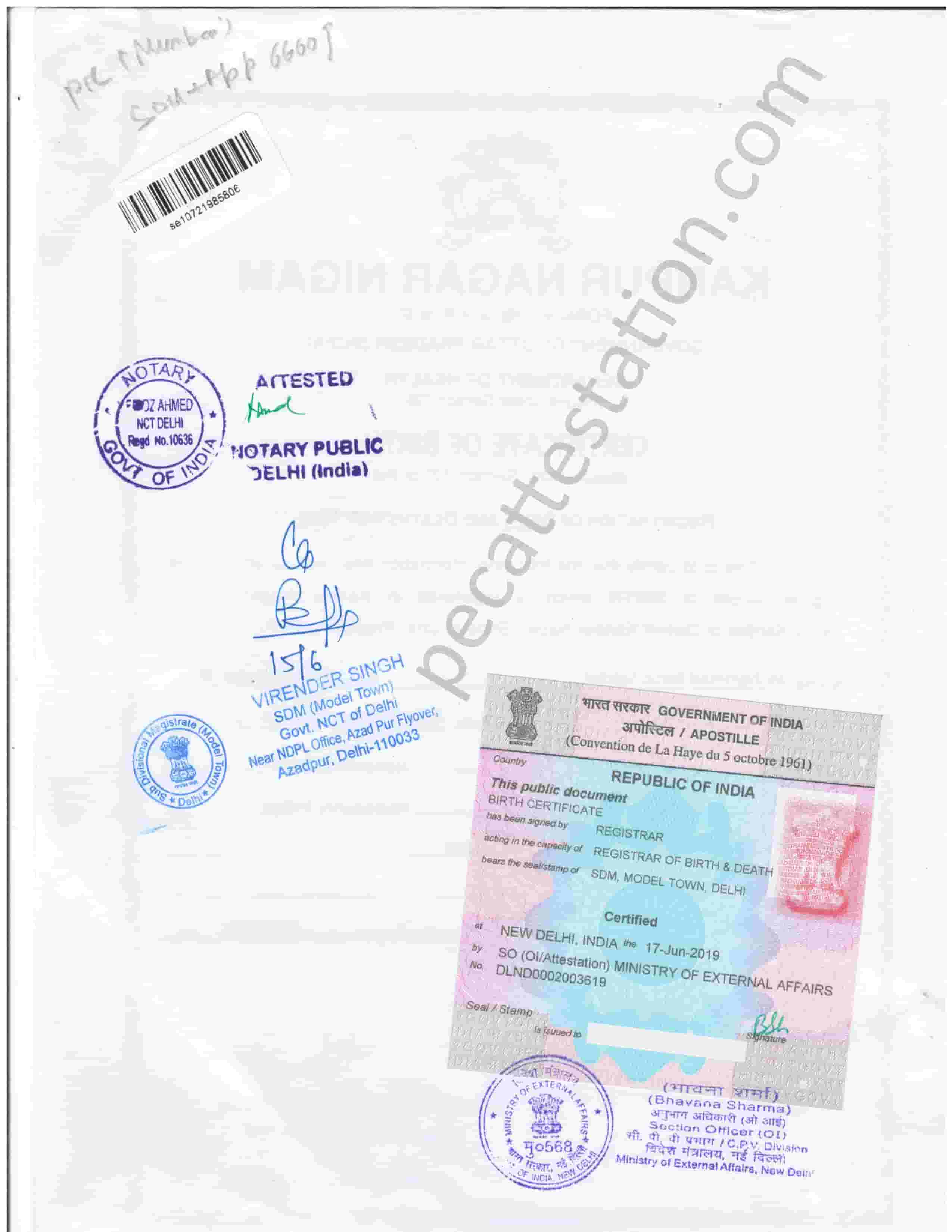
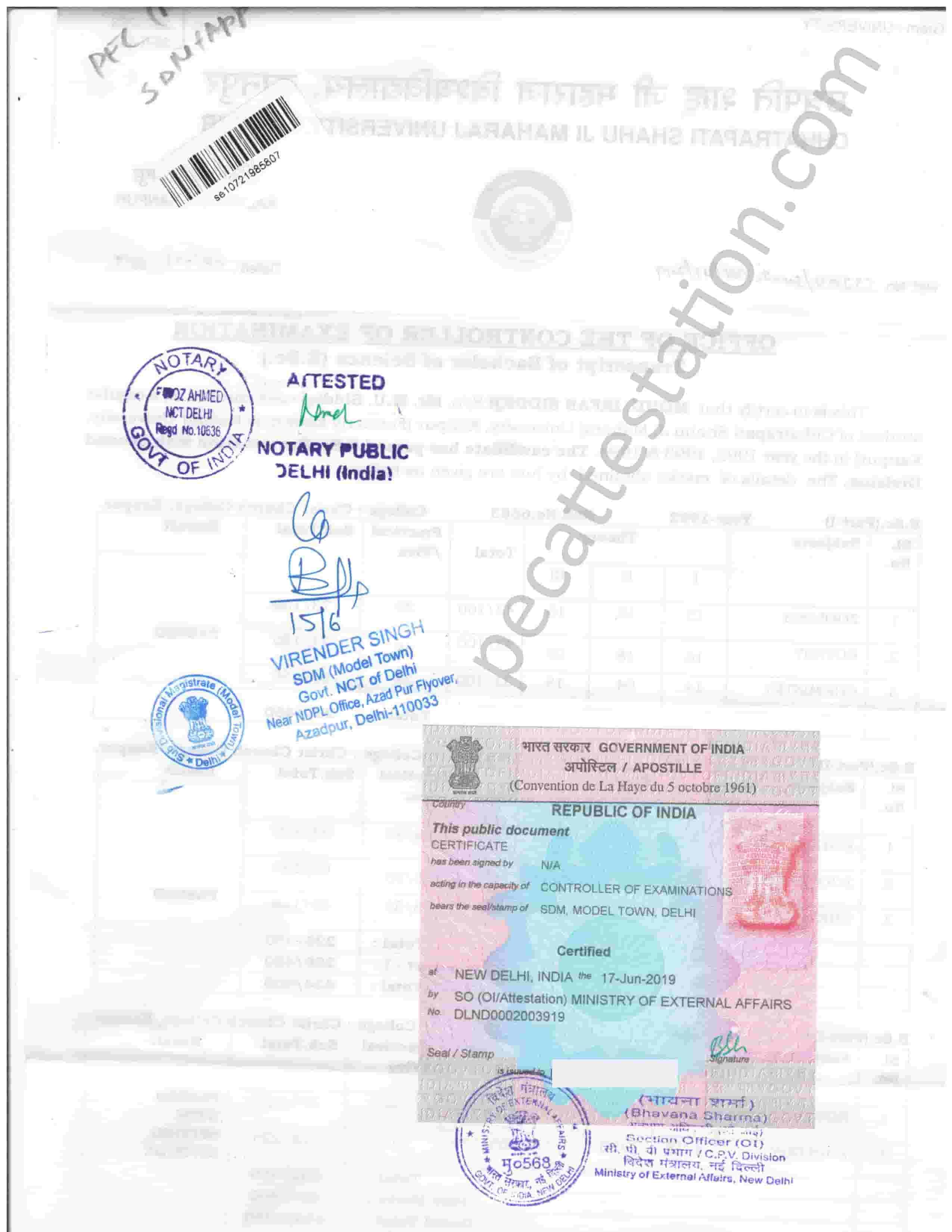
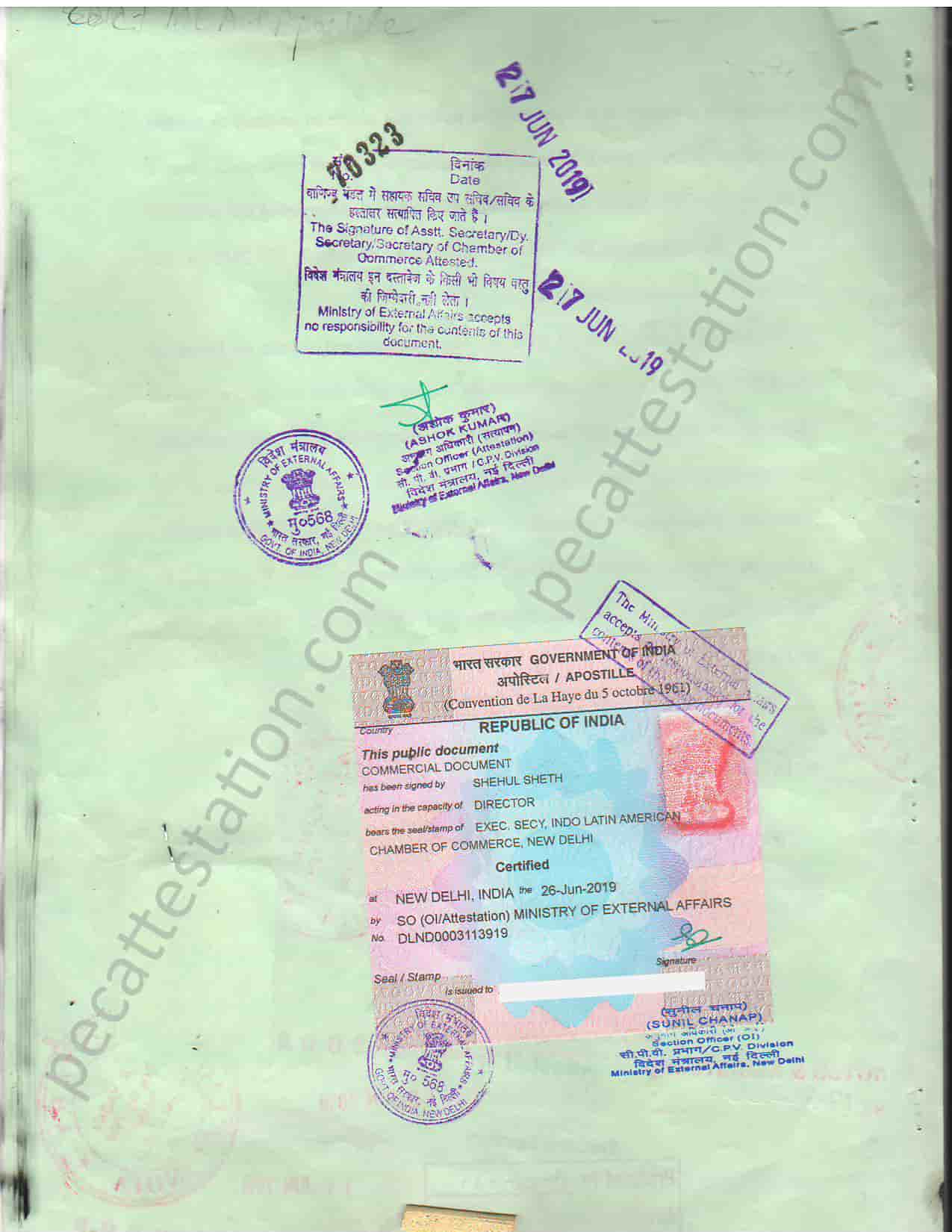
Sample Copies
Why do you need apostille for Philippines?
If you are using your Indian documents to Philippines for work, education, or personal purposes, you will require an apostille. But what is an apostille, and why do you need it? An apostille is a stamp or certificate that validates your documents, like birth certificates or degrees, are valid and could be used officially in Philippines. Because Philippines is part of the Hague Apostille Convention, Indian documents must have this Philippines Apostille stamp to be acknowledged by Philippines authorities. Without an apostille, your documents may not be valid, causing delays. So, obtaining an apostille ensures your documents is accepted in Philippines without any official issues.
How to get Apostille for Philippines?
If you are searching for apostille services for Philippines, PEC Attestation, Apostille, and Translation Services make this apostille process simple and hassle-free in India. We manage everything from verifying your documents to submitting them to the Ministry of External Affairs (MEA) for the apostille. Our skilled team assures a hassle-free process, with most apostille requests settled in just a few days. Additionally, we offer affordable rates and free pick-and-drop services in India, making it convenient for you to get your documents ready for use in Philippines. PEC offers high-quality apostille services in India. With branches across India, including Pune, Pimpri, Ahmedabad, Mumbai, Bangalore, Chennai, Hyderabad, Kolkata, Delhi, Chandigarh, Gurugram, Kerala, Lucknow, Bhopal, Panaji, Noida, Coimbatore, and Vizag.
Procedure for Philippines Apostille
The process for Philippines apostille involves various stages of legalization to assure the reliability of documents for overseas use. Since the process is regionalized in India, documents must pass through different levels of validation before receiving the last Apostille stamp from the Ministry of External Affairs (MEA). As of January 1, 2019, the MEA has decentralized the process, allowing easier access to Branch Secretariats and Regional Passport Offices (RPOs) in 15 cities, including Ahmedabad, Bengaluru, Bhopal, Chennai, Chandigarh, Cochin, Delhi, Hyderabad, Kolkata, Lucknow, Mumbai, Panaji, Raipur, and Thiruvananthapuram.
- Regional Level Attestation
- The process begins with the regional verification of documents. This step includes validation by a notary, or the university (in the case of educational documents), or the Chamber of Commerce (for commercial documents). The process of verification depends on the document category.
- State Government Attestation
- After the regional authentication, the document is sent to the applicable state authority for further validation. This is typically handled by Home department, HRD OR SDM based on document type. State Home Department (SHD): Responsible for personal documents such as birth or marriage certificates. Human Resource Department (HRD): Handles academic certificates. Sub-Divisional Magistrate (SDM): Can act independently of state authorities, but their authentication remains valid at the state level.
- Apostille
- The final stage in the Philippines Apostille process is getting the Philippines Apostille sticker from the MEA. This sticker has the applicant's name and essential details, certifying the document for international use. For commercial documents, the MEA may also need an extra stamp along with the Apostille. This step is crucial as it is managed by the central government and ensures that the documents are recognized under the Hague Convention of 1961.




Comments (0)
Login to post a comment.